EUDR and Ethiopian coffee: the October 2026 numbers.
EUDR Ethiopian coffee: ODI Global puts $160 million to $453 million of export earnings at risk. The numbers, the dates and what to ask. Send your brief.
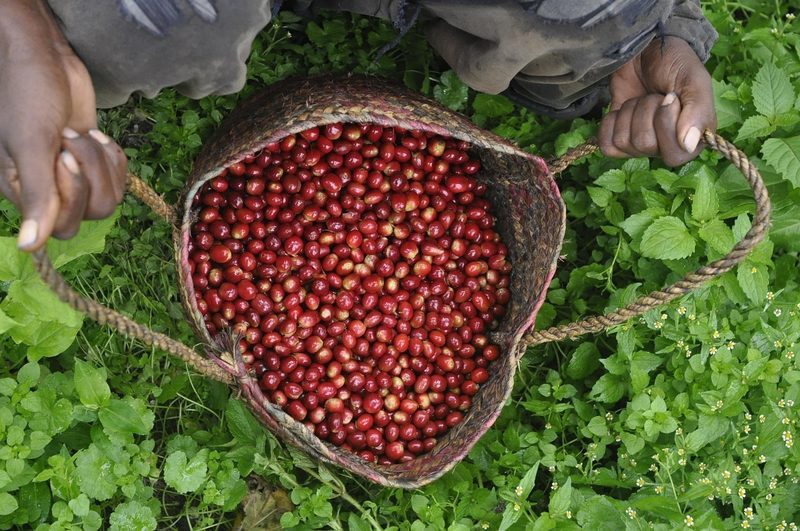
On 16 October 2026 the think tank ODI Global published a briefing on what the EU deforestation regulation (EUDR) could do to Ethiopian coffee. It puts numbers on a risk that has so far been discussed in general terms. This entry sets out what it says, what the EU's own page says about dates, and what it changes for a buyer sourcing this season.
The estimate
The EU takes about 30% of Ethiopia's coffee exports. ODI Global models two cases. If 20% of EU-bound shipments are shut out, Ethiopia loses about $160 million. If 57% are, the loss is up to $453 million. Both are gross figures. If the affected coffee is sold elsewhere at lower prices than European premiums, the study puts the loss at $42 million to $118 million.
Coffee is about 35% of Ethiopia's merchandise export earnings, and the study ties 11% to EU sales. The worst case could cut total foreign exchange earnings by up to 8.5%.
Where the gap is
Roughly 4 million smallholders grow 95% of Ethiopia's coffee, mostly on plots under one hectare. Local collectors and informal traders handle 57.4% of marketed coffee. That is the structure the rule runs into: it asks for the plot, and much of the coffee is gathered from thousands of plots before it reaches a washing station.
- By July 2024 only 200,000 hectares had been mapped out of an estimated 860,000 hectares under coffee, about 23%.
- Mapping a plot costs $4 to $7, and verification adds $5 to $12.
- The study says up to 20% of smallholders are at risk of exclusion.
- It also flags uncertainty over how the EU classifies Ethiopia's traditional forest and semi-forest coffee systems.
The Ethiopian Coffee and Tea Authority has launched a three-year national action plan with the finance and agriculture ministries. It includes farm data collection and upgrading the Coffee Market Information Management System into an Ethiopian Coffee Traceability Management System. That system is not yet fully operational.
The dates
Sources disagree online, so we used the European Commission's own page. It gives 30 December 2026 for large and medium operators and 30 June 2027 for micro and small operators. The regulation was amended in December 2024 and December 2025 to simplify requirements. Check the Commission page again before you rely on a date, because it has moved twice.
What a buyer should ask for
- Plot-level geolocation for the lot, not a regional statement.
- Whether the lot is traceable to a named washing station or cooperative, or was bought through an anonymised channel.
- The date the coffee was harvested and the legality papers that go with it.
- What happens to your contract if a shipment cannot be placed on the EU market.
We treat these as questions to put to the exporter lot by lot. Plot-level geolocation is part of the record we are building, and we describe it as in build on the trust page until a lot ships with it. If you sell into the EU, put the question to every supplier now, not in December.